Virtual Office Around the World: Trends, Benefits & Future Outlook | VANTIS
Explore what's going on with virtual offices globally. Discover key trends, benefits, regional insights, and the future of flexible business presence worldwide. Learn how VANTIS elevates your business in Makati.
By Vantis | March 27, 2026 | 17 min read
What's Going On with Virtual Offices Around the World? The Global Shift to Flexible Business Presence
The traditional 9-to-5 office model is rapidly becoming a relic of the past. Across the globe, businesses are embracing new ways of working, driven by technological advancements, evolving workforce preferences, and a renewed focus on agility and cost-efficiency. At the forefront of this transformation is the virtual office, a dynamic solution that is redefining how companies establish their presence, manage operations, and connect with talent worldwide. But what exactly is going on with virtual offices around the world, and why are they becoming an indispensable tool for modern businesses?
This comprehensive guide delves into the global landscape of virtual offices, exploring their evolution, the driving forces behind their widespread adoption, regional trends, core benefits, and the challenges they address. We'll also cast an eye towards the future, examining how innovations like AI are shaping the next generation of flexible workspaces.
The Rise of the Virtual Office: A Post-Pandemic Phenomenon
The concept of a virtual office, while not entirely new, has experienced an unprecedented surge in relevance and adoption since the global pandemic. The forced shift to remote work during lockdowns accelerated workplace evolution at an unprecedented rate, pushing virtual offices from a niche solution to a mainstream business strategy.
Defining the Modern Virtual Office
A virtual office is a professional office space solution that provides businesses with a prestigious address, mail handling services, virtual receptionist services, and often on-demand access to physical meeting rooms, coworking spaces, or private offices. Unlike a traditional brick-and-mortar office, a virtual office allows businesses to establish a credible presence in a desirable location without the overhead and ongoing maintenance of a physical space. It's about simulating the office environment in a location without physically occupying space there.
Key components typically include:
- Professional Business Address: A physical street address in a prime business district, enhancing credibility and professional image.
- Mail Handling and Forwarding: Services to receive, sort, and forward mail and packages, often with same-day SMS/email alerts.
- Call Answering Services: Professional receptionists answering calls in your company's name, screening, forwarding, and taking messages.
- Access to Meeting Spaces: On-demand access to meeting rooms, conference rooms, or coworking spaces for client meetings, team collaborations, or focused work.
- Administrative Support: Assistance with tasks like document handling, scheduling, and other essential back-office functions.
Key Drivers of Global Adoption
Several powerful forces are propelling the global virtual office market, which was valued at USD 69.55 billion in 2024 and is projected to reach USD 251.50 billion by 2032, growing at a CAGR of 17.43% from 2025-2032. Market Research Future projects the market to reach $48.48 billion by 2034.
- Remote and Hybrid Work as the New Norm: The increasing adoption of remote and hybrid work models is the primary catalyst. Approximately 70% of employees prefer remote work options, and 60% of remote workers would leave their jobs for a full-time remote position at the same pay rate. This shift has led companies to seek flexible solutions that support a distributed workforce.
- Demand for Business Agility and Cost Efficiency: Virtual offices offer significant cost savings compared to traditional offices, reducing expenses related to rent, utilities, and maintenance by up to 75%. This financial incentive is particularly appealing to startups, freelancers, and SMEs looking to allocate resources strategically.
- Technological Advancements: The proliferation of high-speed internet, cloud computing, video conferencing (usage up 200% in recent years), and collaboration tools has made virtual offices more accessible and efficient. These technologies enable seamless communication and collaboration among remote teams.
- Globalization of Business Operations: Companies are expanding their reach across borders, and virtual offices provide the ability to establish a local presence in multiple locations without the constraints of physical office spaces. This allows businesses to tap into new markets and access diverse talent pools.
- Sustainability and Environmental Focus: Virtual offices contribute to a greener footprint by reducing the need for large, centralized office buildings and minimizing employee commutes.
Global Trends Shaping the Virtual Office Landscape
The virtual office market is not static; it's a rapidly evolving ecosystem driven by innovation and changing business needs. Several key trends are shaping its trajectory worldwide.
Hybrid Work Models and Decentralized Teams
The future of work is undeniably hybrid. A 2022 study by IWG found that 72% of global businesses now offer flexible working arrangements. Virtual offices are central to this model, providing the infrastructure for teams to collaborate effectively whether they are working from home, a coworking space, or a client site. They create structured digital spaces where teams can work together just as well as they would in person, fostering seamless collaboration and boosting productivity.
The Demand for Business Agility and Cost Efficiency
In an unpredictable global economy, businesses prioritize agility. Virtual offices offer unparalleled scalability, allowing companies to expand or contract their presence without the burden of long-term leases. This flexibility is crucial when testing new markets or adapting to fluctuating business demands. The cost savings, often exceeding 90% compared to traditional offices, remain a powerful draw for businesses of all sizes.
Technology Integration and AI Enhancements
Technology is rapidly transforming virtual offices. Expect increasing reliance on AI tools, growth in virtual collaboration platforms, and enhanced cybersecurity measures. AI productivity tools already report 20% more operational efficiency for remote businesses. The AI in remote work market is expected to reach $104.4 billion by 2033.
Future trends include:
- Smart Meeting Assistants: AI-powered tools to manage agendas, take notes, and summarize discussions.
- Enhanced Project Management: Deeper integration with project management software for seamless workflow.
- Virtual Meeting Spaces: Immersive 2D and even 3D virtual environments (like Metaverse office platforms, projected to reach $27 billion by 2030) that mimic physical presence, fostering spontaneous interactions and team bonding.
- Security Enhancements: Biometric authentication, behavioral analytics, and zero-trust frameworks to secure data.
Expanding Beyond Mail Forwarding: Comprehensive Service Offerings
Modern virtual offices are far more than just a mailing address. They offer a comprehensive package that simulates a real office environment, including professional call handling, access to meeting rooms, and sometimes even business lounges or coworking spaces. Providers are increasingly offering value-added services like international business registration assistance, cross-border accounting, and tax preparation services to support global expansion.
Focus on Sustainability and Reduced Commute
The "Green Revolution" is influencing business decisions globally. Virtual offices align with sustainability goals by reducing the carbon footprint associated with daily commutes and the energy consumption of large office buildings. This appeals to environmentally conscious businesses and employees alike.
Regional Spotlights: How Virtual Offices are Evolving Across Continents
The adoption and specific characteristics of virtual offices vary significantly by region, reflecting local economic conditions, regulatory environments, and business cultures.
North America: Innovation Hubs and Tech Adoption
North America is considered a mature virtual office market, primarily due to early adoption and the presence of well-established players like Regus and Servcorp. It held over 40% of the global revenue in 2024, with a market size of USD 6502.20 million. The US market, in particular, is experiencing rapid growth, driven by its robust tech sector and a high demand for flexible solutions for startups and remote teams. Innovation in virtual collaboration platforms and AI integration is particularly strong here.
Europe: Regulatory Nuances and Established Markets
Europe dominated the global virtual office market in 2023 and accounted for over 30% of global revenue in 2024 (USD 4876.65 million). Countries like the UK and Germany have mature markets, with a strong emphasis on legal compliance for registered addresses and tax substance. The demand for flexible working arrangements continues to rise, especially in major business hubs like London, Paris, and Berlin, where virtual office costs can range from €50-€250 per month. Providers often offer comprehensive packages that address strict regulatory requirements for business registration and legal correspondence.
Asia-Pacific: Rapid Growth and Emerging Economies
The Asia-Pacific region is a rapidly growing market for virtual offices, projected to grow at a CAGR of 16.2% from 2024 to 2031, with a market size of USD 3738.77 million in 2024. Countries like China, Japan, and India are seeing significant expansion, driven by digital transformation and the rise of remote work culture. Virtual office costs in major Asian cities like Hong Kong, Singapore, and Tokyo range from $100 to $400 per month, while emerging markets like India, Malaysia, and Vietnam offer more affordable options ($20-$150).
The Philippines and Makati's Role: In the Philippines, particularly in Makati, virtual offices are gaining traction as a strategic solution for local startups, freelancers, and international businesses looking to establish a credible presence without significant upfront investment. Providers like VANTIS offer registration-ready virtual office packages, which are crucial for DTI/SEC/LGU business registration, a service often not readily available or bundled by competitors. This local nuance highlights the importance of understanding specific regional compliance needs.
Middle East & Africa: New Business Frontiers
The Middle East and Africa represent emerging markets for virtual offices, holding around 2% of global revenue in 2024 (USD 325.11 million) and growing at a CAGR of 13.9% from 2024 to 2031. The GCC countries, in particular, are witnessing growth due to increasing foreign investment and a drive towards diversifying economies beyond oil. Virtual offices provide a cost-effective entry point for businesses looking to establish a foothold in these dynamic regions, often with a focus on prestigious addresses in cities like Dubai and Riyadh.
The Core Benefits: Why Businesses Are Embracing Virtual Offices
The global shift towards virtual offices is underpinned by a compelling array of benefits that address the evolving needs of modern businesses.
Cost Savings and Reduced Overhead
One of the most significant advantages of a virtual office is the drastic reduction in overhead costs. Businesses can save up to 75% on operating costs compared to traditional office spaces by eliminating expenses like rent, utilities, maintenance, and office supplies. This allows for strategic resource allocation, especially vital for startups and SMEs.
Enhanced Professional Image and Credibility
A virtual office provides a prestigious business address in a prime location, instantly elevating a company's professional image and credibility. This is crucial for building trust with clients, investors, and partners, especially when operating from a home office or expanding into new markets. Professional call answering and mail handling services further reinforce this polished perception.
Market Expansion and Global Reach
Virtual offices enable businesses to establish a local presence in new markets without the need for physical relocation or substantial investment. This allows companies to test new markets, comply with local regulations, and resonate with local customers by having a recognized local address and contact number. It's a scalable way to achieve global recognition and access new client opportunities.
Flexibility and Scalability
Modern businesses require adaptability. Virtual offices offer unparalleled flexibility, allowing companies to scale operations up or down easily without the constraints of a long-term physical lease. This is particularly beneficial for businesses with fluctuating team sizes or those experimenting with new ventures. Employees also gain flexibility, leading to improved work-life balance and increased productivity.
Access to Talent Anywhere
By decoupling work from a fixed location, virtual offices empower businesses to hire the best talent regardless of geographical boundaries. This expands the talent pool, fosters diversity, and allows companies to build remote-first teams, leveraging digital solutions for location independence and improved work-life balance for employees.
Addressing the Challenges: Navigating the Virtual Office World
While the benefits are substantial, operating a virtual office, especially on a global scale, comes with its own set of challenges that require thoughtful solutions.
Regulatory Compliance and Legal Considerations
Legal requirements for virtual offices differ significantly between countries, cities, and states. Businesses must conduct due diligence for their specific location, understanding regulations around registered addresses, foreign qualification, and local licensing. Some jurisdictions may require disclosure of virtual address use, while others have specific rules for official purposes.
Solution: Partner with reputable virtual office providers that comply with local laws and regulations and can assist with business registration, permits, and tax implications in foreign territories. Ensure the provider offers a legitimate commercial real estate presence and can furnish documentary proof of address for compliance.
Building Company Culture Remotely
Maintaining a cohesive company culture and fostering team bonding can be challenging without regular face-to-face interaction. Remote workers may feel isolated or disconnected.
Solution: Implement robust virtual communication tools (e.g., Slack, Zoom, Microsoft Teams) and prioritize virtual connection through regular check-ins, virtual team-building activities, and shared online spaces. Plan annual in-person meetings if feasible to strengthen relationships. Establish clear expectations for communication and availability.
Data Security and Privacy
Operating digitally across various locations raises concerns about data security and privacy. Remote setups can introduce new vulnerabilities if not properly managed.
Solution: Implement strong cybersecurity measures, including VPNs, encrypted communications, and regular security audits. Utilize cloud-based platforms with robust security features and ensure all team members adhere to strict data protection protocols. Reputable virtual office providers should also have secure mail handling and access control measures in place.
The Future of Virtual Offices: What's Next?
The virtual office is not just a temporary solution but a maturing operating system for the future of work. Its evolution will continue to be driven by technological innovation and a deeper understanding of human-centric work models.
Hyper-Personalization and Niche Services
As the market matures, virtual office providers will offer increasingly personalized and niche services. This could include industry-specific administrative support, specialized compliance assistance for certain sectors, or highly customized virtual environments tailored to a company's unique brand and workflow. The development of customizable virtual office environments for diverse business needs is a key opportunity.
Deeper Integration with Physical Coworking Spaces
The lines between virtual and physical workspaces will continue to blur. Virtual offices will likely offer even more seamless integration with on-demand physical spaces, allowing businesses to access coworking desks, private offices, and meeting rooms with greater flexibility and ease. This hybrid approach provides the best of both worlds: a professional virtual presence with physical touchpoints when needed.
AI-Powered Virtual Assistants and Automation
AI will play an even more central role, moving beyond smart meeting assistants to AI-driven virtual receptionists capable of handling complex inquiries, automated compliance checks, and proactive administrative support. AI-powered booking assistants, like VANTIS's CopilotKit, are just the beginning, streamlining reservations and enhancing user experience.
The Blurring Lines Between Virtual and Physical
The future virtual office will be a unified platform deeply integrating all necessary tools—communication, project management, CRM, and specialized software—into a single, cohesive experience. This hyper-integrated digital infrastructure, combined with the strategic use of physical spaces for curated human connection (e.g., team-building retreats), will redefine the nature of work itself. It promises a world where work adapts to life, rather than life contorting around work.
Choosing the Right Virtual Office Provider
Selecting the right virtual office provider is a critical decision that can significantly impact your business's success and professional image.
Key Factors to Consider
- Location and Prestige: Opt for an address in a prime business district that enhances your brand's credibility.
- Service Inclusions: Evaluate the range of services offered (mail handling, call answering, meeting room access, administrative support) and ensure they align with your business needs.
- Compliance and Registration Readiness: For businesses needing to register locally, ensure the virtual address is legally usable for DTI/SEC/LGU registration and that the provider assists with compliance.
- Technology and Infrastructure: Look for providers with robust, high-speed internet, modern AV equipment, and advanced booking systems.
- Flexibility and Scalability: Choose a provider that offers flexible pricing plans (hourly, daily, monthly) and allows you to easily scale services up or down.
- Customer Support: A dedicated and responsive support team is invaluable for seamless operations.
- Cost Transparency: Understand all fees, including setup, mail forwarding, and potential overage charges.
VANTIS: Elevating Your Business Presence in Makati
In the heart of Makati's central business district, VANTIS stands out as a premier provider that embodies the future of virtual offices. Located on the 49th floor of PBCom Tower, VANTIS offers a prestigious Ayala Avenue business address that is registration-ready for DTI/SEC/LGU purposes – a crucial differentiator in the Philippine market. Beyond a prime address, VANTIS provides a full-service ecosystem, integrating:
- Workspaces & Access: From hot desks (₱100/hour, ₱500/day) to executive boardrooms and a professional recording studio, offering flexible physical touchpoints.
- Corporate, Finance & Compliance Services: In-house support for business registration, accounting, tax, payroll, and legal advisory, eliminating the need for multiple vendors.
- Business Presence & Virtual Office: Tiered virtual office packages (starting from ₱1,999/month) that include mail handling, dedicated call answering, and bundled coworking/meeting room hours.
- Connectivity & Office Infrastructure: Enterprise-grade reliability with 3 redundant ISPs, 4K screens, and advanced security, all powered by an AI-first platform from SageDynamics.
VANTIS's AI-powered CopilotKit booking assistant ensures seamless reservations, while its comprehensive offerings provide a competitive edge for freelancers, startups, and established businesses seeking a credible, flexible, and technologically advanced business presence in the Philippines.
Conclusion: The Enduring Power of the Flexible Business Model
The global virtual office market is in a period of robust growth and profound transformation. Driven by the enduring shift to remote and hybrid work, the demand for business agility, and rapid technological advancements, virtual offices are no longer just a cost-saving measure but a strategic imperative for businesses worldwide. They offer an efficient and scalable solution for companies of all sizes, enabling them to maintain a professional presence without steep overhead costs.
From the mature markets of North America and Europe to the rapidly expanding economies of Asia-Pacific and emerging frontiers in the Middle East and Africa, the virtual office is redefining work, space, and human connection. By embracing these flexible solutions, businesses can unlock unprecedented levels of human potential, access diverse talent pools, and navigate the complexities of global expansion with confidence and agility. The future of work is here, and the virtual office is its cornerstone.
About Vantis
Vantis is a premium coworking community in Makati dedicated to empowering innovators, creators, and entrepreneurs. Through our insights and expertise, we share valuable perspectives on productivity, workplace innovation, flexible work solutions, and the evolving landscape of professional spaces in the Philippines. Our mission is to inspire and support professionals in shaping the future of work.
More Blog Posts
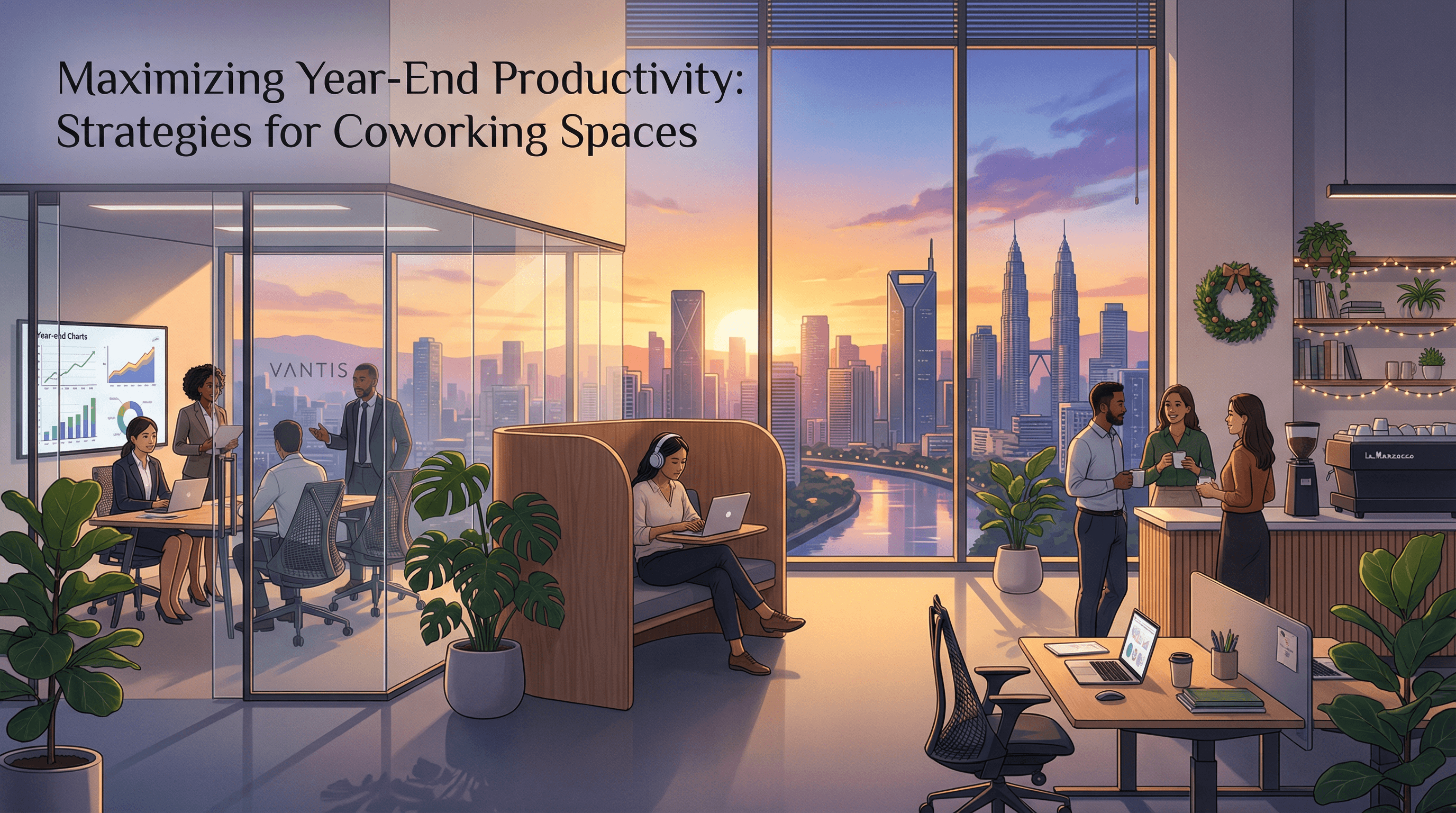
The Gift of Productivity: Last-Minute Tips for Year-End Tasks
A practical guide for coworking operators on turning the hectic year-end rush into a productivity advantage by optimizing space usage, technology, community initiatives, and back-office operations.

Mastering Your Mornings: Routines for Peak Productivity
Master productivity at VANTIS Makati: Start with intention—plan priorities, hydrate. Use time-blocking & Pomodoro for focus. Take breaks to connect & recharge. Leverage high-speed internet, ergonomic spaces, skyline views on PBCom Tower's 49th floor. Rewire habits for success.
No Image
The Future is Flexible: Adapting to Evolving Work Models
Hybrid work is reshaping how people work, making coworking spaces essential hubs for flexibility, technology, and community. In the Philippines, growing freelance and hybrid work drives demand for adaptable spaces. Those that combine innovation, well-being, and connection will lead.
Interested? Have some questions?
Contact us! We're here to help answer any questions you may have about our coworking spaces, services, or anything else.
Email Us
Get in touch via email
Quick Response
We typically respond within 24 hours
Send us a message
Book Vantis Now
Ready to experience the perfect workspace? Reserve your spot at Vantis coworking spaces today.
View Spaces & Book Now